About us
It begins with my grandmother
Some ideas begin with strategy. Others begin with a memory.
Every evening she waited for us. The table was ready long before we arrived. Bread cut, plates arranged, the smell of dinner slowly filling the kitchen.
But she never began without us. Only when every chair was filled did the meal begin. And no one left the table until everyone had finished.
At the time, it felt normal. Now I understand it was something deeper: the table was never just about food. It was about belonging.
Years later I began to understand that many people miss this feeling. Modern life has made meals faster, quieter, more individual. We eat while standing, scrolling, or rushing to the next thing. Yet something very simple remains true — people still need a table.
Tavolina was born from that thought. What if the table became the centre again? What if cooking was visible, shared, and alive? What if dining felt less like a service and more like gathering at home?
So Tavolina is not designed as a restaurant. It is a hybrid cultural space built around food.
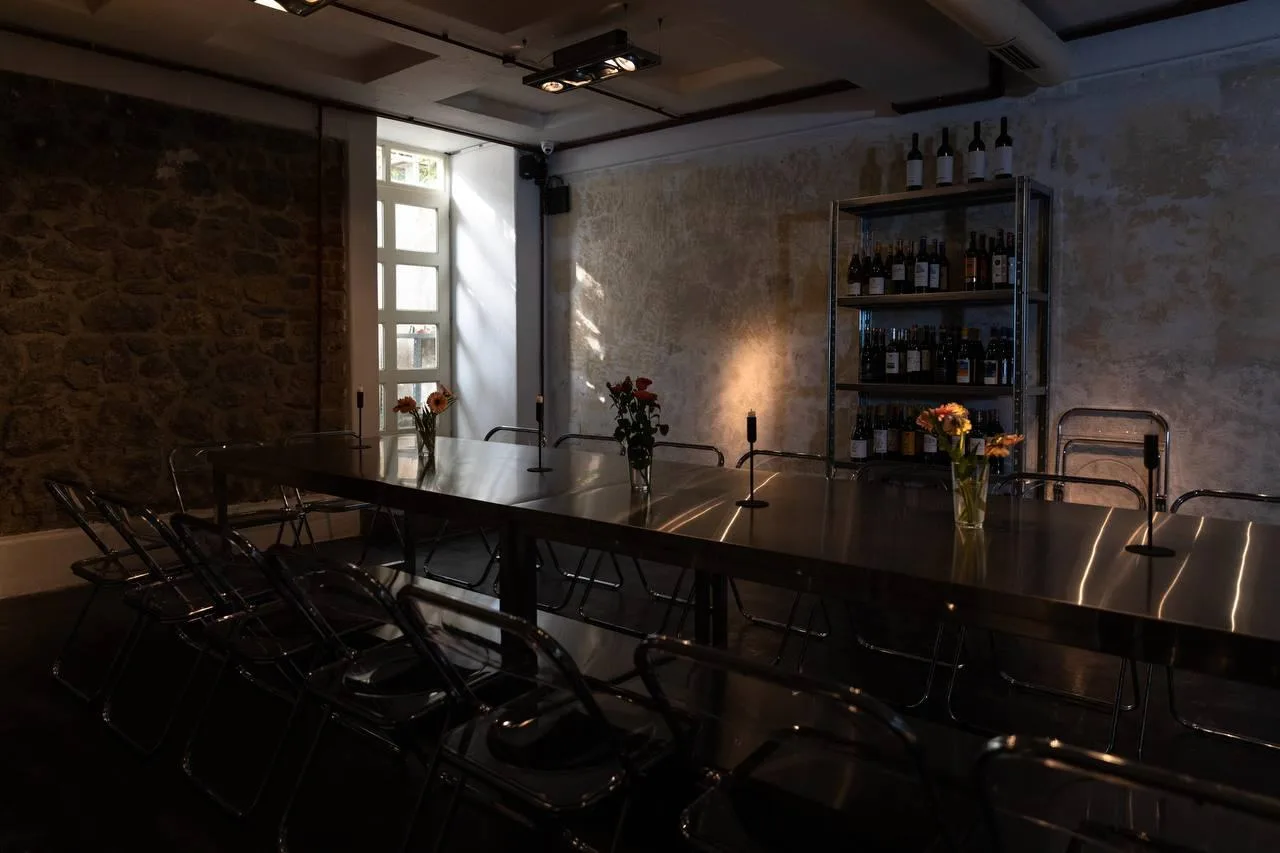
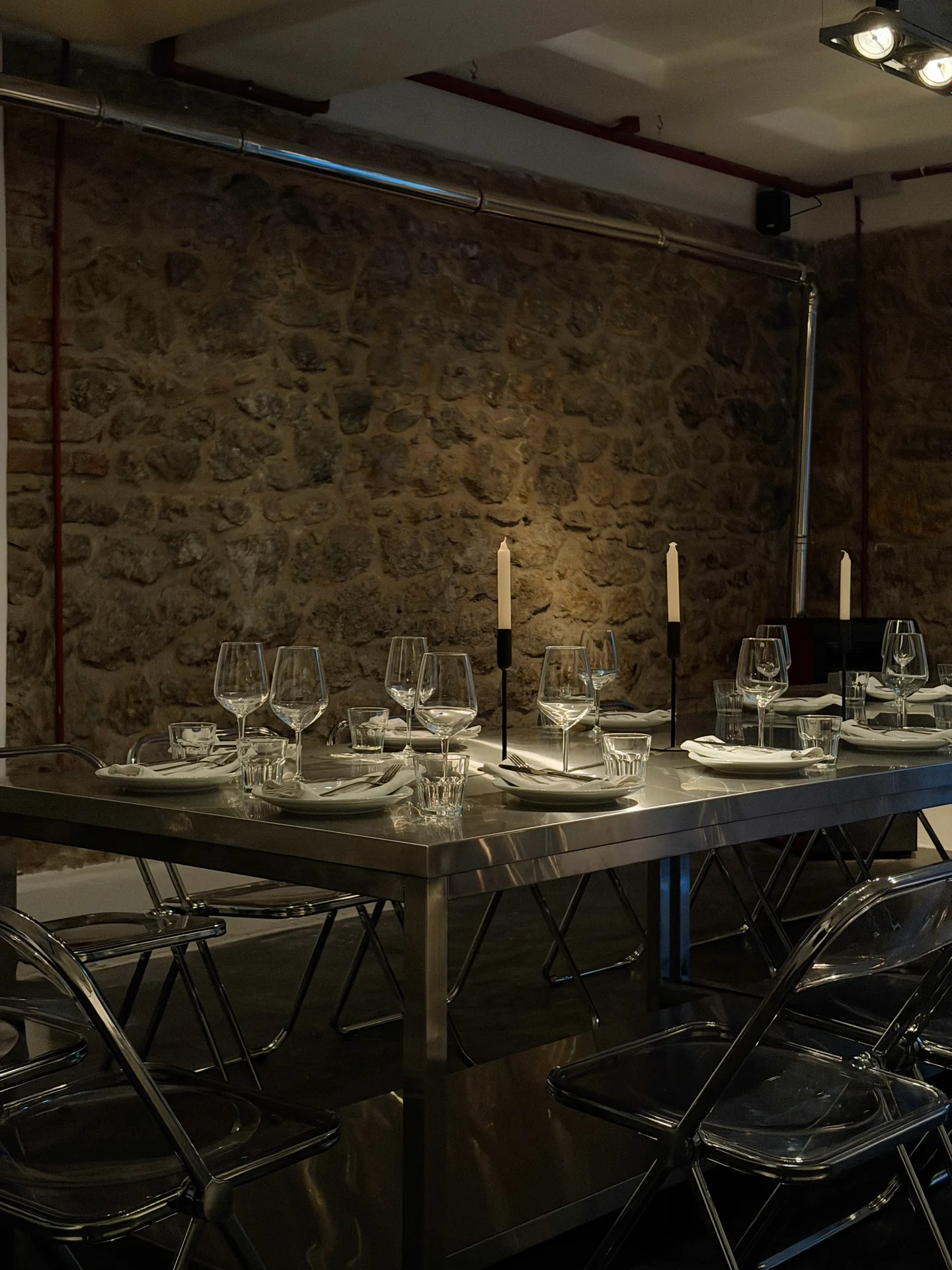
At the heart of it there is one element: a long table. Around it the kitchen stays open and alive. Ingredients are visible, techniques shared, gestures observed. Cooking becomes part of the atmosphere of the room. The space sits somewhere between a home kitchen, an artist's studio, and a small urban salon.
Food is not simply nourishment. It carries geography, memory, migration, and identity. Here cuisine becomes a medium for storytelling — a recipe can speak about a region, a family tradition, or an exchange between cities. The table becomes a place where cultures intersect, quietly and naturally, through taste and conversation.
Cooking is creation, and eating together is one of the oldest cultural acts there is. Tavolina simply brings that back into the city: a place where food, conversation and curiosity meet.
Come and eat
One sitting a night, twenty seats. When they are gone, they are gone.